
NVIDIA RTX Spark: Everything We Know

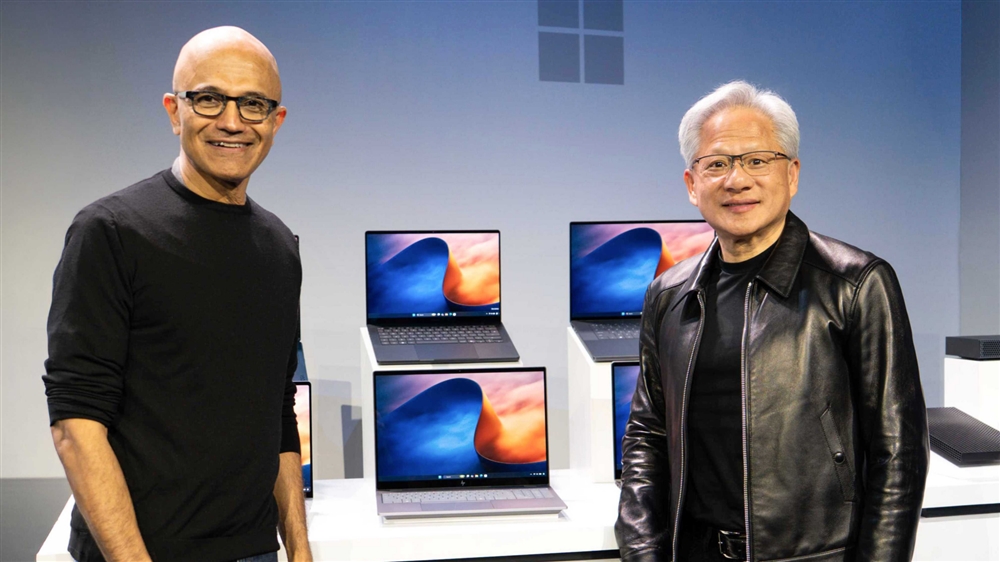
Image: NVIDIA
First announced by Jensen Huang at Computex, RTX Spark is NVIDIA's first complete laptop processor, with CPU, GPU, and memory on a single package. The first laptops launch October 16, so it's a good time to sort out what's confirmed.
RTX Spark represents NVIDIA's full-throttle entry into the client Windows-on-Arm market. Rather than pairing an off-the-shelf CPU with a mobile discrete GPU across a narrow PCIe bus, NVIDIA built a unified superchip from the silicon up. It merges custom Arm CPU cores, desktop-grade Blackwell graphics architecture, and a unified memory pool.
NVIDIA and Microsoft are pitching RTX Spark as the hardware for PCs where AI agents carry out tasks on your behalf, entirely on-device, with new Windows security controls to keep them in line. Satya Nadella calls it "unmetered intelligence." For AI, that means no subscription, no per-token fee, and your data stays on your machine. Whether agents become the killer app is an open question, but for anyone already running local models, 128GB of GPU-accessible memory is a compelling pitch.
With the first laptops launching October 16, here is everything we know about the platform, the silicon, and the machines that will define it.
The Silicon: Grace Meets Blackwell
At the heart of RTX Spark is a bespoke System-on-Chip (SoC) co-developed with MediaTek. The flagship configuration, named the N1X, combines a 20-core NVIDIA Grace CPU (featuring a cluster of high-performance Arm Cortex-X925 and power-efficient A725 cores) with a Blackwell-generation RTX GPU packing 48 Streaming Multiprocessors and 6,144 CUDA cores. If that core count sounds familiar to PC builders, it should: it sits right in line with NVIDIA's desktop GeForce RTX 5070 class.
A secondary configuration trims the silicon down slightly for less-expensive hardware, offering an 18-core Grace CPU alongside a 5,120 CUDA core GPU.
Both variants link the CPU and GPU via NVIDIA's NVLink-C2C (chip-to-chip) interconnect, which NVIDIA rates at 600 GB/s. For context, that's several times the bandwidth of the PCIe connection that links a CPU to a discrete GPU in a typical gaming laptop, and it's what lets both processors work from the same pool of memory without constantly copying data back and forth. The whole package operates within an adjustable system TDP ranging between 45W and 80W.
Think of it as a scaled-down cousin of the DGX Spark, the little gold desktop AI box NVIDIA launched last year, reworked as something you can carry in a backpack. NVIDIA rates the chip at up to one petaflop of AI performance (measured at FP4 precision) and claims it can run 120-billion-parameter language models with a million-token context window, right on the laptop.
The Secret Weapon: 128GB of Unified Memory
While 6,144 CUDA cores are impressive on paper, the true differentiator for RTX Spark is how it handles memory.
Historically, Windows laptops have separated system RAM from discrete GPU VRAM. Even high-end mobile workstations typically cap out at 16GB or 24GB of dedicated VRAM. If an AI model or a complex 3D scene exceeds that limit, performance falls off a cliff as data spills across PCIe lanes into system RAM.
Apple solved this for macOS with the M-series unified memory architecture, turning high-spec MacBooks into speed demons. RTX Spark is the PC world's direct answer.
By supplying up to 128GB of shared LPDDR5X unified memory, the Grace CPU and Blackwell GPU share direct access to the same memory space. Armed with NVIDIA's 5th-generation Tensor Cores and native FP4 micro-scaling, an RTX Spark laptop can load and run massive 120-billion-parameter LLMs locally.
For developers and creative professionals, that means running local inference, experimenting with diffusion networks, and handling large language models without cloud API latency or ongoing subscription bills.
What About Gaming?
AI gets the headlines, but NVIDIA is also making real gaming claims. The company says RTX Spark laptops can run AAA games at 1440p at over 100 frames per second with DLSS 5, Reflex, and G-SYNC. At the October launch event, Microsoft showed Gears of War: E-Day running on its Surface Laptop Ultra and said the next Call of Duty, due in 2027, will run natively on RTX Spark.
Crucially for multiplayer fans, the Easy Anti-Cheat and BattlEye systems are supported, which removes one of the biggest roadblocks that has kept competitive games off Windows on Arm. Additionally, Adobe rebuilt Photoshop and Premiere for the platform, and apps like Blender and DaVinci Resolve are on board.
What to Watch For
RTX Spark represents the most aggressive architectural rethink Windows laptops have seen in years. If NVIDIA and Microsoft hit their targets, this platform could finally give Windows enthusiasts what they've spent years envying on the Mac side: workstation-grade computational power, cool thermals, and legitimate multi-hour battery life.
High-capacity unified memory configs won't come cheap, but for AI practitioners and mobile visual artists, the prospect of a sub-5-pound laptop running 120B models without a server farm connection is a welcome one.
RTX Spark laptops are coming to Micro Center, with systems from Asus, Dell, HP, Lenovo, Microsoft, and MSI hitting store shelves on October 16. Stay tuned and we'll bring you early benchmark testing and hands-on reviews, plus all the RTX Spark shopping advice you'll need, and if you want to see these machines in person, keep an eye on your local Micro Center.
More from MC News
- Run AI Locally: The Best LLMs for 8GB, 16GB, 32GB Memory and Beyond
- How to Use Local AI With Your Own Files: A Beginner's Guide to RAG
- Reading vs. Answering: The Two Hardware Bottlenecks Behind Local AI Performance
- How to Use a Local LLM in Visual Studio Code
- Hands-On with the AMD Ryzen AI Halo
- Quantization Explained: Why the Same LLM Gives Better Results on High-End Hardware
- Why Context Length, Not AI Model Size, Is Your Biggest VRAM Problem
- How to Use LM Studio to turn your PC into an AI Server
- Why VRAM and Memory Bandwidth are Key for Powering Local AI
- Keyboard 101: Intro to Computer Keyboards
- Fix It Yourself: Talking to iFixit on Why Repairable Tech Matters
- The Local LLM Your Laptop's Been Waiting For
- Gemma vs Qwen: Which Local AI is Best?